
Want smarter boxing betting tips? Discover bet types, odds analysis and fight prediction tricks to boost your winning chances today.
Boxing Betting Tips: A Beginner’s Guide to Winning Bets

Winning boxing bets consistently depends on combining bet type knowledge, fighter research, and disciplined bankroll management rather than relying on guesswork. Beginners who study fighter records, recent form, and matchup styles before placing a wager improve their long-term decision-making compared to random betting.
Boxing betting offers several core bet types, including moneyline (win) bets, round betting, method of victory, and over/under total rounds. Boxing odds are typically displayed in moneyline, fractional, or decimal formats depending on the bookmaker and region, and understanding how each format translates into implied probability is essential before placing any stake.
Predicting a boxing outcome starts with analyzing fighter statistics, recent performance, weight class history, and stylistic matchups. Reviewing training camp reports and past fight footage adds further context beyond surface-level records.
Choosing where to place a boxing bet matters as much as choosing the bet itself, since licensing, odds quality, and platform reliability vary widely between operators. Several independent betting comparison sites review and compare online bookmakers to help readers evaluate betting platforms objectively before signing up.
This guide breaks down these fundamentals in detail, starting with an overview of the best boxing betting tips for beginners, before moving into bet types, odds formats, and fight analysis methods. Readers must be 18 or older and should check local gambling laws before betting, as rules vary by country and responsible gambling practices are strongly encouraged.
What Are the Best Boxing Betting Tips for Beginners?

The best boxing betting tips for beginners combine disciplined bankroll management, thorough fighter research, and objective decision-making rather than emotional wagering. This foundation covers the practical habits that separate consistent bettors from casual guessers, before breaking down bankroll rules, research methods, value spotting, and line comparison in the sections that follow.
For newer bettors, staying organized around a few core habits reduces avoidable losses. From a strategic standpoint, treating each bet as an independent decision, rather than chasing previous losses, keeps judgment clear. From a research standpoint, prioritizing recent fight footage over reputation alone often reveals more about current form than a fighter’s overall record.
How Should Beginners Manage Their Bankroll When Betting on Boxing?
Beginners manage boxing betting bankrolls by setting a fixed budget, staking a consistent unit size per bet, and avoiding chasing losses after a bad result. This structure keeps individual wagers proportionate to the total bankroll rather than reactive to recent outcomes.
A betting budget separates gambling funds from everyday finances and defines the total amount a bettor accepts risking over a set period. Unit sizing then divides that budget into small, equal portions per bet, commonly a small fixed percentage of the total bankroll, so no single fight outcome causes significant damage. A common bankroll management approach suggests staking a small, consistent percentage of the total bankroll, often within a low single-digit range, on a single boxing bet.
Avoiding loss chasing means resisting the urge to increase stake size or place impulsive follow-up bets after a loss to recover money quickly. Keeping unit size fixed regardless of a winning or losing streak preserves long-term discipline. Reviewing bankroll performance periodically, rather than after every single fight, supports objective adjustments instead of emotional ones.
Why Is It Important to Avoid Emotional or Biased Betting?
Yes, avoiding emotional or biased betting matters in boxing because favoritism, nationality bias, and hype override objective analysis, leading to poorly calculated stakes. This ties directly into the bankroll discipline outlined above, since even a well-managed unit size loses effectiveness if the underlying pick is driven by feeling rather than data.
A common beginner mistake involves backing a favorite fighter or a boxer sharing the bettor’s nationality regardless of current form, injury history, or opponent style matchup. This pattern skews perceived probability, making a fighter seem more likely to win simply because the bettor wants that outcome.
Bias also shows up when a bettor overvalues a well-known name or past championship reputation while ignoring recent losses, layoffs, or a weight class change. Objective handicapping instead weighs measurable factors such as recent fight footage, stance matchups, and reach differences over emotional attachment or hometown pride. Separating personal preference from the actual betting decision keeps the analysis focused on the fighter most likely to win the fight itself, not the fighter the bettor wants to win.
What Common Mistakes Should Beginner Boxing Bettors Avoid?
Beginner boxing bettors commonly repeat four mistakes: ignoring style matchups, overlooking weight cuts, betting only on big names, and ignoring odds movement. Skipping fighter-specific analysis in favor of surface-level impressions leads directly to weaker predictions.
- Ignoring style matchups means overlooking how a boxer’s stance, reach, or fighting rhythm interacts with an opponent’s tendencies, rather than judging the fight on records alone.
- Overlooking weight cuts means skipping how a fighter’s move up or down in weight class affects power, stamina, and recovery heading into fight night.
- Betting only on big names means favoring a well-known champion or fan-favorite fighter over a lesser-known opponent with better current form or a favorable stylistic edge.
- Ignoring odds movement means missing shifts in the betting line that reflect new information, such as injury news or heavy public action on one side.
Treating these four factors as a checklist before placing a wager narrows the gap between casual guessing and informed boxing betting.
What Types of Boxing Bets and Odds Should You Know?
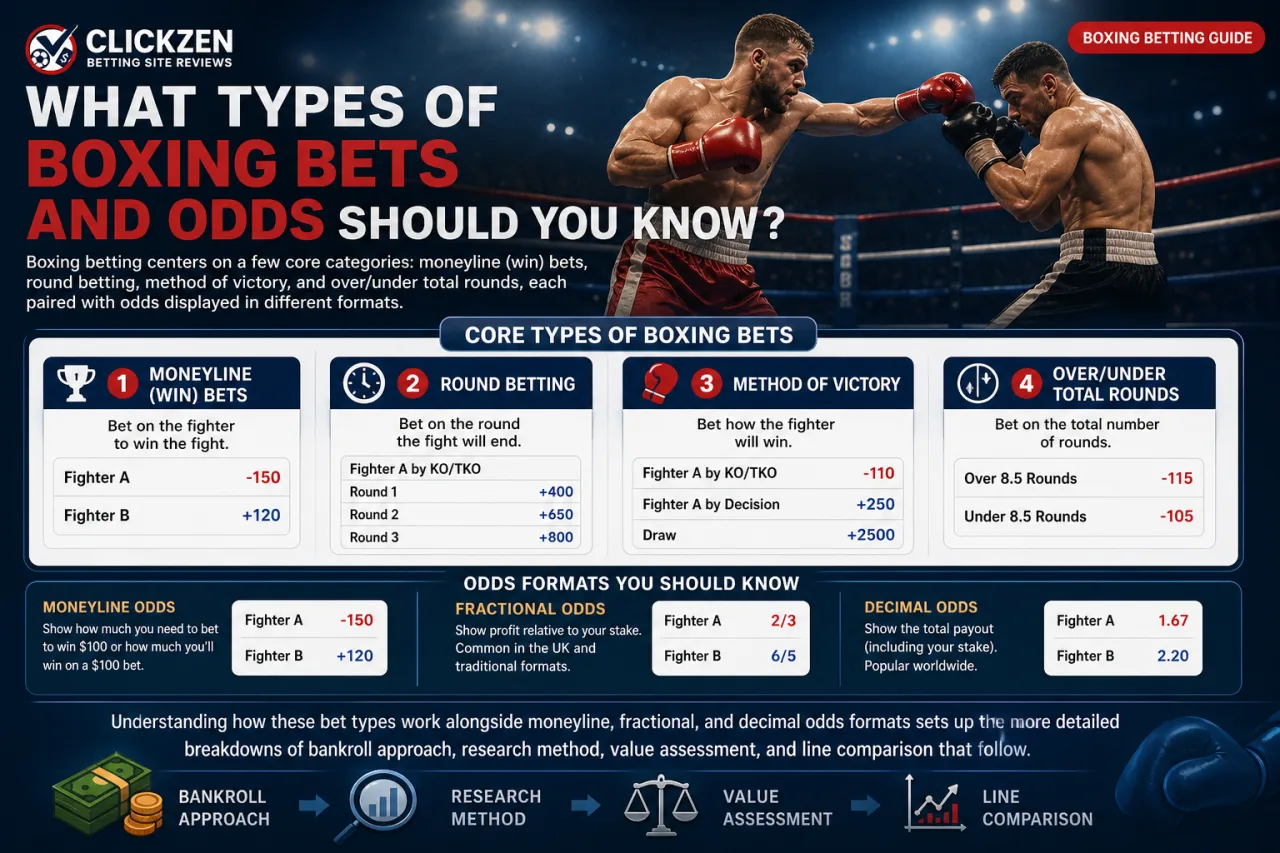
Boxing betting centers on a few core categories: moneyline (win) bets, round betting, method of victory, and over/under total rounds, each paired with odds displayed in different formats. Understanding how these bet types work alongside moneyline, fractional, and decimal odds formats sets up the more detailed breakdowns of bankroll approach, research method, value assessment, and line comparison that follow.
What Are the Main Types of Boxing Bets?
Boxing betting includes five main bet types: moneyline (match winner), method of victory, round betting, over/under total rounds, and prop bets. Each category asks a different question about the fight, and understanding the distinctions clarifies how odds get set and how a stake gets settled.
Moneyline, or match winner, betting simply asks which fighter wins the bout outright, regardless of how the win happens. Method of victory narrows the prediction further, requiring a call on whether the fight ends by knockout, technical knockout, decision, or disqualification.
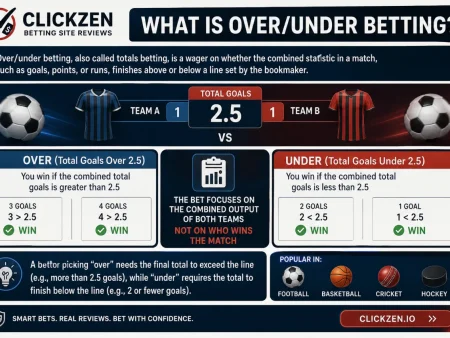
Round betting asks a bettor to pick a specific round in which the fight ends, which pays out at longer odds due to the added precision required. Over/under total rounds instead asks whether the fight goes over or under a set number of rounds, sidestepping the need to name a winner.
Prop bets cover additional outcomes tied to the fight, such as whether a knockdown occurs or whether the bout goes the distance. These five categories often combine within a single card, letting a bettor build a wager around fighter research and matchup analysis rather than a single outcome type.
How Do Boxing Betting Odds Work (Moneyline vs Fractional vs Decimal)?
Moneyline odds lead with a winner’s name and a plus or minus number, fractional odds show potential profit as a fraction of the stake, and decimal odds display total payout as a single multiplier. These three formats express the same underlying probability differently, which matters once bet type and bankroll unit size from earlier sections come into play.
Moneyline odds mark a favorite with a minus figure showing the stake needed to profit a fixed amount, while an underdog carries a plus figure showing profit on a fixed stake. Fractional odds present profit relative to stake as a ratio, common on UK-facing bookmakers, where the first number represents profit and the second represents stake. Decimal odds, favored across European and Asian platforms, multiply the stake directly to show total return including the original stake.
Converting any of these three formats into implied probability reveals how the bookmaker assesses a fighter’s chance of winning before the fight, which then guides value comparisons against personal fight analysis.
What Is a Parlay or Combo Bet in Boxing Betting?
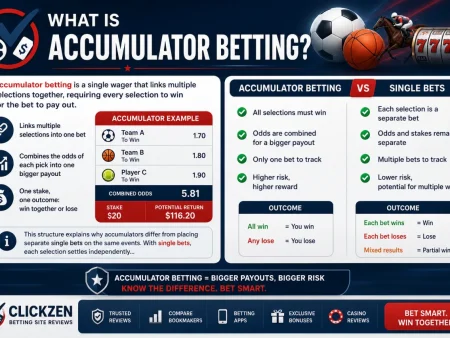
A parlay, or combo bet, links two or more separate boxing predictions into a single wager that only pays out when every selected outcome wins. This connects directly to the moneyline, method of victory, and round betting categories covered above, since a parlay typically combines picks from those same bet types across one or multiple fight cards.
Combining a moneyline pick on one bout with a method of victory pick on another raises the total payout because odds multiply together across every leg of the combo. This structure also raises risk sharply, since a single incorrect leg voids the entire wager regardless of how the other selections finished.
Sportsbooks calculate parlay payouts by combining the odds format used for each individual leg, whether moneyline, fractional, or decimal, into one combined price. A boxing parlay generally carries a lower win probability than a single straight bet, since every added leg reduces the overall chance of the full combination landing.
Beginners weighing a parlay against a straight bet apply the same bankroll unit sizing discussed earlier, since a higher potential reward does not offset the sharper downside risk built into combo betting.
How Do You Analyze and Predict Boxing Fight Outcomes Before Betting?
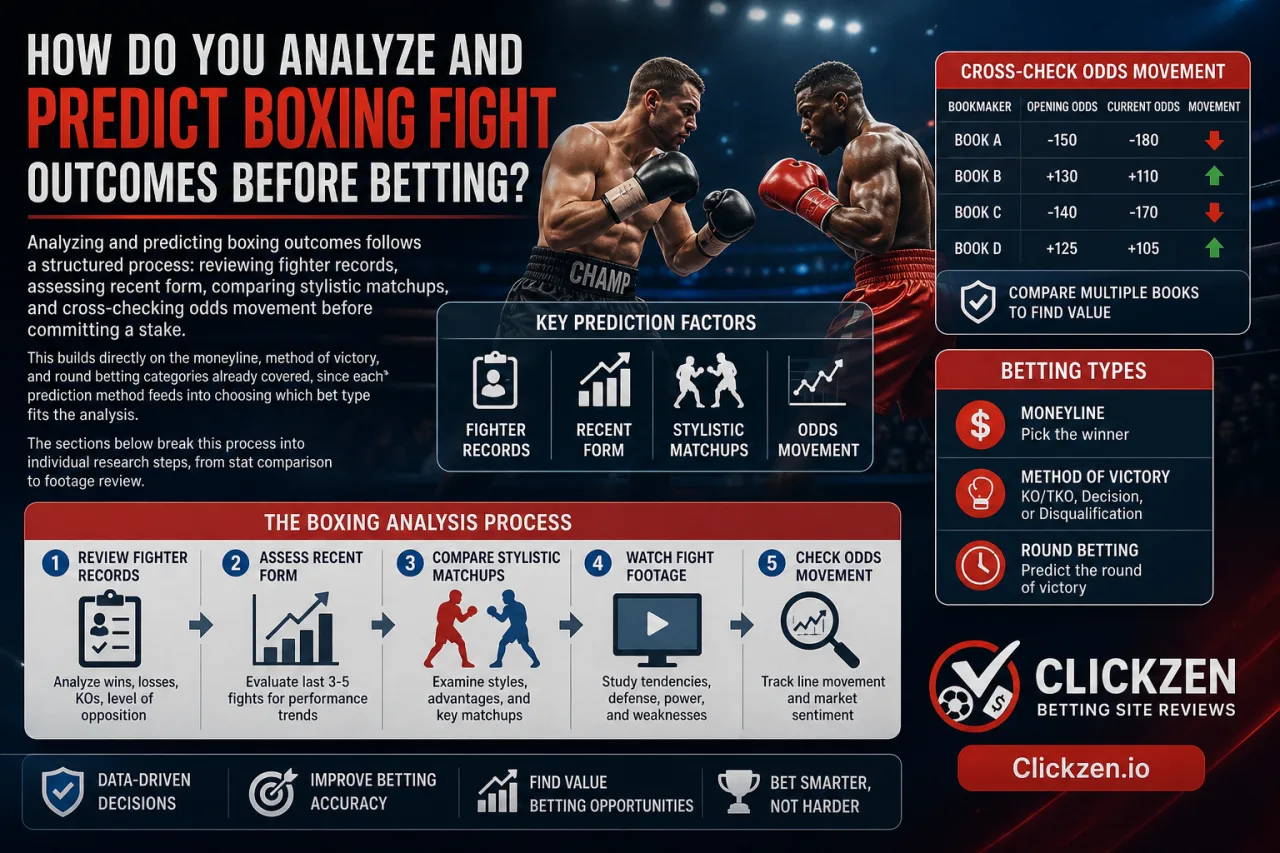
Analyzing and predicting boxing outcomes follows a structured process: reviewing fighter records, assessing recent form, comparing stylistic matchups, and cross-checking odds movement before committing a stake. This builds directly on the moneyline, method of victory, and round betting categories already covered, since each prediction method feeds into choosing which bet type fits the analysis. The sections below break this process into individual research steps, from stat comparison to footage review to trainer camp reports.
What Fighter Statistics Should You Check Before Betting?
Fighter statistics worth checking before betting include win-loss record, knockout percentage, reach and height, recent activity, and age relative to a fighter’s physical peak. These five data points build directly on the style-matchup and footage-based research approach outlined earlier, turning general fight analysis into specific numbers a bettor can compare side by side.
- Win-loss record shows overall career output, though quality of opposition matters more than the raw number of wins or losses.
- Knockout percentage indicates finishing power, helping separate boxers built for method-of-victory or round betting from those who typically go the distance.
- Reach and height reveal a potential range advantage, which often predicts how a taller or longer fighter controls distance against a shorter opponent.
- Recent activity tracks how many fights a boxer has taken in a set recent period, flagging ring rust or extended layoffs.
- Age relative to a fighter’s physical peak affects speed, recovery, and durability, particularly in longer, higher-round bouts.
Cross-referencing these five stats against an opponent’s profile narrows down which bet type, moneyline, method of victory, or round betting, best fits the matchup.
How Does Studying Fighting Styles Help Predict Fight Outcomes?
Studying fighting styles predicts boxing outcomes by revealing how a boxer’s approach, whether puncher, boxer, southpaw, or orthodox, interacts favorably or unfavorably with a specific opponent. This builds on the stat-based research covered above, since reach, knockout percentage, and activity numbers only carry weight once matched against how a fighter’s actual style performs against the opponent’s approach.
A pure boxer relies on footwork, jab accuracy, and distance control, while a puncher prioritizes power shots and looks to close range quickly. Matching these two types often favors the boxer, who uses lateral movement to avoid sustained exchanges, unless the puncher closes distance effectively behind a strong jab.
Southpaw versus orthodox matchups shift footwork and angle dynamics, since a southpaw’s lead hand and stance create angles that many orthodox fighters train against less frequently. This mismatch history often produces awkward, closer fights compared to same-stance pairings.
Stylistic advantages surface when one fighter’s strength directly targets an opponent’s known weakness, such as a fast counterpuncher against a fighter who leads carelessly with a right hand. Weighing these interactions alongside the win-loss record, knockout rate, and reach data already reviewed sharpens which bet type, moneyline, method of victory, or round betting, fits the matchup.
Why Does Fight Camp, Weigh-In, and Recent Form Matter for Predictions?
Yes, fight camp reports, weigh-in results, and recent form matter for boxing predictions because they reveal a fighter’s actual physical and mental readiness closer to fight night than career records alone. This builds on the style-matchup and stat-based research covered above, since even a favorable stylistic edge on paper loses relevance if a boxer enters the ring depleted or undertrained.
Training camp news signals how a fighter prepared, including sparring quality, coaching changes, or reported injuries that rarely appear in official records. A camp disrupted by a coaching switch or reported layoff often points to inconsistent preparation heading into the bout.
Weigh-in results expose weight cut struggles, since a fighter who appears drained, dehydrated, or unusually smaller than fight weight risks reduced power and stamina in later rounds. A dramatic same-day weight gain sometimes signals a difficult, energy-draining cut rather than a controlled camp.
Recent performance trends round out this picture by showing whether a boxer trends toward improvement, decline, or inconsistency across their last several outings. Combining camp reports, weigh-in condition, and recent form with the earlier statistical and style analysis narrows the gap between a fighter’s reputation and their actual state on fight night.
Which Bookmakers Are Best for Boxing Betting?
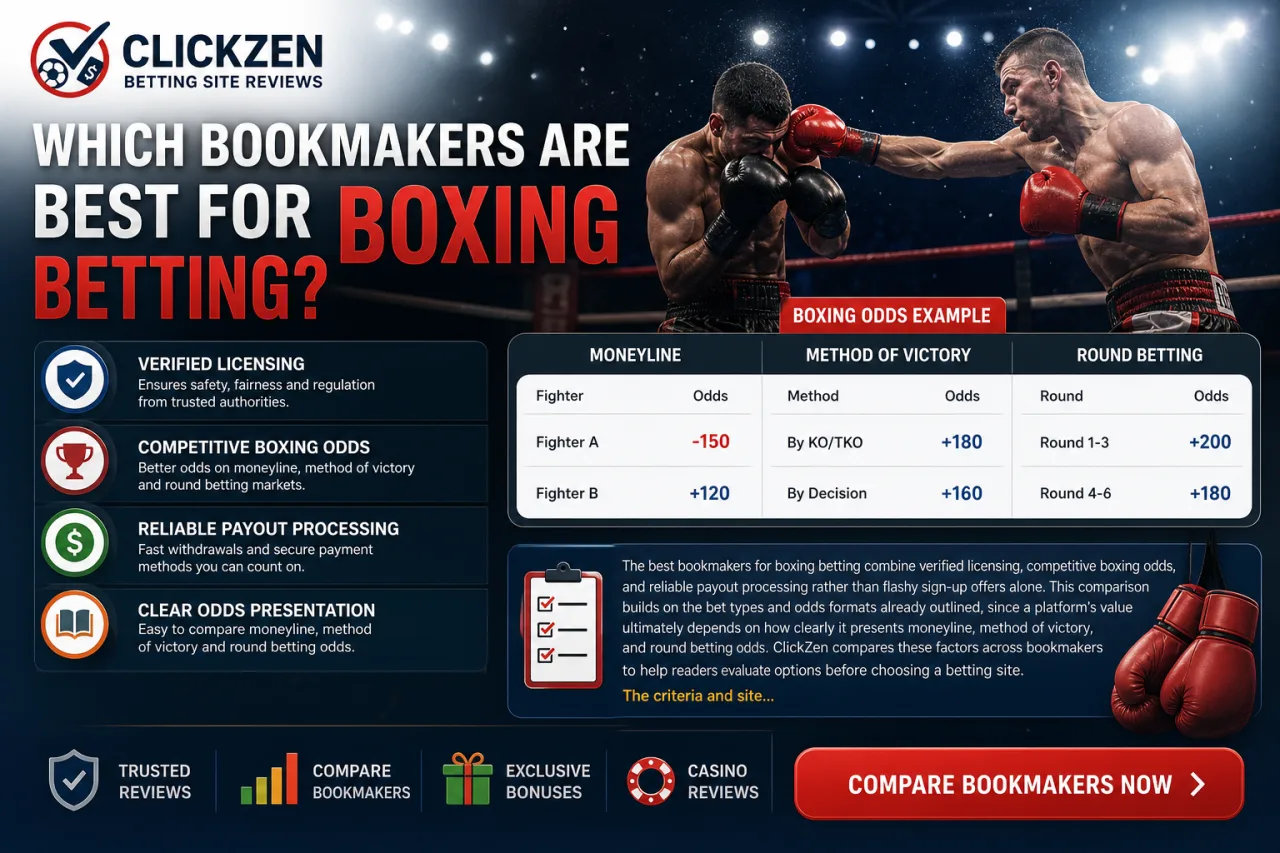
The best bookmakers for boxing betting combine verified licensing, competitive boxing odds, and reliable payout processing rather than flashy sign-up offers alone. This comparison builds on the bet types and odds formats already outlined, since a platform’s value ultimately depends on how clearly it presents moneyline, method of victory, and round betting odds. ClickZen compares these factors across bookmakers to help readers evaluate options before choosing a betting site. The criteria and site-by-site comparison follow in the sections below.
What Should You Look for in a Boxing Betting Site?
A boxing betting site earns consideration based on five criteria: verified licensing, competitive odds, boxing market variety, payout speed, and mobile usability. These criteria build directly on the odds formats and bet types covered earlier, since a platform only delivers value when it presents moneyline, method of victory, and round betting options clearly and pays out reliably.
- Licensing confirms a bookmaker operates under a recognized gambling authority rather than an unregulated offshore setup.
- Odds competitiveness compares moneyline, fractional, or decimal pricing on the same fight across multiple books to spot better implied value.
- Market variety measures how many boxing bet types a site lists beyond the basic moneyline, including round betting, method of victory, and prop bets.
- Payout speed reflects how quickly a site processes withdrawals after a settled bet.
- Mobile usability determines whether live odds, fight cards, and account features load cleanly on a phone browser or app.
ClickZen evaluates bookmakers against these five factors to give readers an objective comparison point before choosing a boxing betting site. Readers must be 18 or older and should verify local gambling laws before signing up with any platform.
How Do Boxing Betting Bonuses and Promotions Work?
Boxing betting bonuses and promotions work by matching a deposit, offering a risk-free first bet, or boosting odds on a specific fight, with terms attached that determine how the bonus converts to withdrawable funds. This ties into the bookmaker comparison criteria already outlined, since a promotion only carries real value once it sits alongside verified licensing, competitive odds, and reliable payouts.
A welcome bonus typically matches a portion of a new bettor’s first deposit, releasing the bonus amount only after meeting a wagering requirement tied to bet volume or odds minimums. A free bet credits a fixed stake for a specific boxing market, such as a moneyline pick on an upcoming card, paying out only the winnings rather than the original stake. A boosted odds offer raises the payout on a selected fighter or outcome above the standard market price, usually capped at a maximum stake or payout limit. Boxing welcome bonuses typically come with wagering requirements or turnover multiples that must be met before any winnings can be withdrawn, and these terms vary from one bookmaker to another.
Using these offers wisely means reading the wagering requirement, expiry window, and eligible bet types before opting in, then applying the same bankroll unit sizing discussed earlier rather than increasing stakes just to chase a bonus. ClickZen compares bookmaker bonus terms alongside licensing and odds quality to help readers assess these offers before signing up. Readers must be 18 or older and should check local gambling laws and practice responsible gambling before claiming any promotion.
What Advanced Boxing Betting Concepts Go Beyond the Basics?
Advanced boxing betting concepts include live in-play wagering, judges’ scoring bias, referee stoppage tendencies, and value hunting against public perception, each extending beyond moneyline and method-of-victory basics already covered. These niche angles sit on top of the fighter research, style matchups, and bookmaker comparisons discussed earlier, offering an edge to bettors ready to move past beginner-level analysis. The sections that follow break down live betting mechanics, scoring tendencies, and referee patterns individually.
How Does Live/In-Play Betting Differ From Pre-Fight Betting in Boxing?
Live or in-play boxing betting differs from pre-fight betting through round-by-round odds shifts, momentum-based wagering, and added risk from split-second decisions rather than pre-fight research alone. This extends the moneyline and round betting categories covered earlier into a faster-moving format tied directly to what happens inside the ring.
- Round-by-round odds shifts: Prices update after every completed round based on scorecards, visible damage, and fatigue, moving in real time rather than staying fixed from opening bell to final result. A fighter trailing early but landing a strong finish in a later round can see odds swing sharply in their favor within minutes.
- Momentum betting: Wagers get placed based on which fighter controls the pace, output, or ring center at that specific moment, rather than pre-fight statistics or style matchups. Shifts in stamina, aggression, or accuracy during the fight drive these decisions.
- Risk and opportunity: The added risk comes from reacting to short-term momentum that a trained fighter can reverse within a single round. The opportunity lies in capturing value on a fighter whose in-fight performance outpaces their pre-fight odds.
Can Judges’ Scoring Tendencies or Referee Style Affect Betting Outcomes?
Yes, judges’ scoring tendencies and referee stoppage habits affect boxing betting outcomes, since these patterns shift the likelihood of a decision win versus a stoppage win independent of fighter skill alone. This rare-attribute angle extends the live in-play mechanics covered above into a pre-fight research layer tied directly to method-of-victory and round betting.
Some judges score aggression and forward pressure heavier than clean counterpunching, favoring pressure fighters on decision cards even when output numbers look close. Some judges are perceived to favor volume punching over defensive counterpunching when scoring close rounds, which can add an extra layer of unpredictability to fight outcomes.
Referees also vary in how quickly they stop a fight once a boxer appears hurt, which shifts knockout-versus-decision probability on method-of-victory bets. Some referees are perceived to have their own tendencies toward stopping fights earlier or later, which can add another layer of unpredictability to how a bout unfolds.
Checking assigned judges and the referee before a fight adds a layer beyond fighter stats and style matchups already discussed.
Conclusion
Winning boxing bets comes down to layering several habits together: sizing units correctly, keeping personal bias out of fighter selection, and cross-checking records, style matchups, camp reports, and weigh-in condition before choosing between a moneyline, method-of-victory, or round bet. Comparing odds formats across licensed, well-reviewed bookmakers adds further value on top of solid fight analysis, while treating bonuses and parlays as extras rather than shortcuts protects bankroll discipline. Advanced angles like live wagering, judging tendencies, and referee habits reward bettors once these fundamentals are already in place. Applied together, this framework turns boxing betting from guesswork into a repeatable, informed process for placing smarter wagers.
Marcus Zeno is the CEO and Lead Betting Analyst at ClickZen. With over eight years of experience in the iGaming industry, he specializes in evaluating global sportsbooks, mobile betting apps, and bonus terms. Marcus is dedicated to cutting through promotional noise to provide bettors with transparent, fact-based insights.
New Casinos

Zula Casino is a U.S.-focused social and sweepstakes gaming platform offering casino-style games through Gold Coins and Sweeps Coins. Eligible users can earn Sweeps Coins through no-purchase methods and promotions, with prize redemptions starting from 50 SC.

William Hill is a long-established sportsbook and casino brand founded in 1934. Its UK and international operations are owned by evoke plc and regulated through recognised authorities including the UK Gambling Commission. The platform offers sports betting, Bet Builder, selected Cash Out, casino games, mobile betting and multiple payment options, although features and promotions vary by jurisdiction.

Winamax is a regulated European betting and poker operator with licensed operations in France, Spain, and Germany. It combines pre-match and live sports betting with a dedicated poker ecosystem featuring cash games, tournaments, Sit & Go, and Expresso, while product availability varies by jurisdiction.

Vave is a crypto-focused sportsbook and casino offering sports, esports, slots and live dealer games, but its unclear current licensing status remains a significant trust concern.

W88 is a multi-product betting brand offering sportsbook, live betting, slots, and live casino games. Its operator, licence, promotions, and payment methods vary by regional domain.

Videoslots is a Malta-based online casino and sportsbook with a large game library, multiplayer casino features and licences across several regulated markets.



Top Rated Casinos

FanDuel is a regulated North American betting and gaming brand offering Sportsbook, Casino, Fantasy, Racing and prediction markets, with product availability determined by state or provincial regulations.

DraftKings is a regulated North American sportsbook and gaming operator offering sports betting, live wagering, casino games, daily fantasy sports, Pick6 and horse racing in eligible jurisdictions.

Fanatics Sportsbook is a regulated U.S. betting platform available in 23 states plus Washington, D.C., offering major sports markets, live betting, same game parlays and a distinctive FanCash rewards ecosystem.


ClickZen is an independent betting information and review website providing clear, practical insights into sportsbooks, online casinos, betting apps, bonuses, and related services for a global audience.
This website is intended for users aged 18 and over. Gambling can be addictive, so please gamble responsibly. The content on this website is for informational purposes only.
About ClickZen