
Discover how prop bets work, the main types you can bet on, and tips to bet on props smartly. Read our complete guide before placing your next bet.
Prop Bets Explained: A Complete Guide for Bettors

Prop bets are wagers placed on specific outcomes or occurrences within a sporting event rather than solely on the overall match result. They can cover an individual player’s statistics, a team’s performance, or a particular event that happens during a game. Prop markets are available across many major sports, including soccer, American football, basketball, tennis, and ice hockey.
Prop bets generally fall into three broad categories: player props, team props, and game props. Player props focus on an individual athlete’s performance, team props track specific statistics produced by one side, and game props cover match-wide events or outcomes that are not limited to a single player.
Prop bet odds use the same common formats as other sports betting markets, including American, decimal, and fractional odds. These odds determine the potential return on a successful wager and can also be converted into implied probability.
A disciplined approach to prop betting involves researching player form, matchups, injuries, expected playing time, market prices, and other relevant factors. However, no research method or betting strategy can eliminate the possibility of losing.
Understanding these fundamentals provides a useful foundation for examining how prop bets work, how they are priced, and how different prop markets vary across sports.
What Are Prop Bets and How Do They Work?
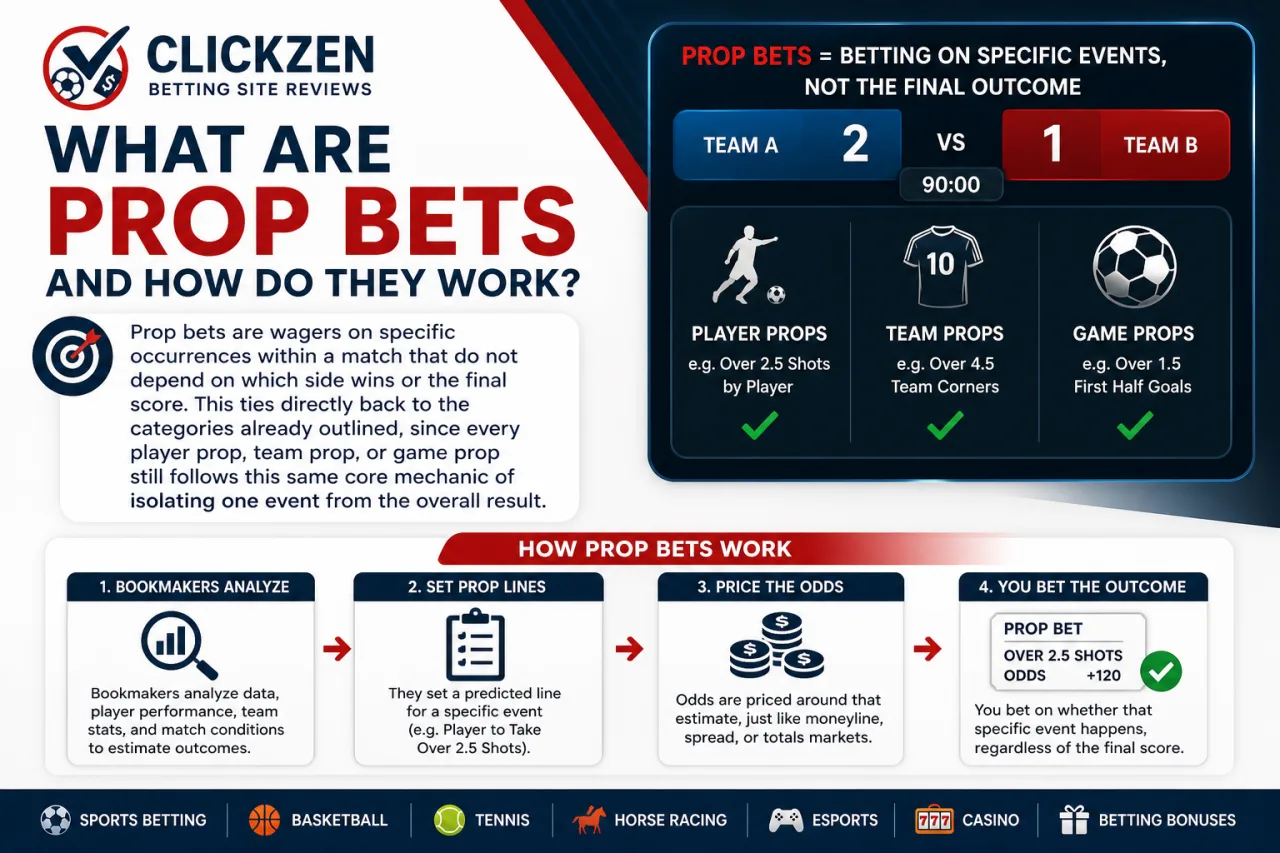
Prop bets are wagers on a defined statistic, action, or occurrence within a sporting event. Depending on the market, settlement may be based on a player’s performance, a team’s statistical output, or a specific event that takes place during the game.
Sportsbooks create prop lines by estimating the probability or expected range of a particular outcome and assigning odds around that estimate. For example, a basketball sportsbook may post an over/under line for a player’s total points, while a soccer sportsbook may offer odds on whether a particular player records a shot on target.
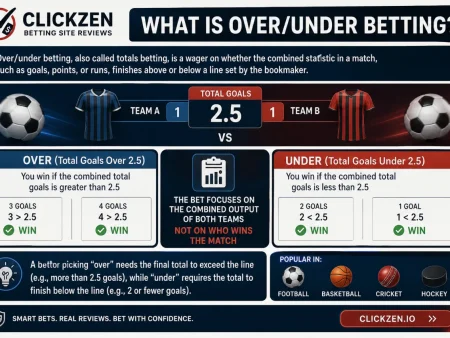
Prop bets differ from standard betting markets mainly in what determines settlement. A moneyline bet settles according to which side wins, a spread or handicap bet uses the final score after the relevant handicap is applied, and a totals bet depends on whether the combined score finishes above or below a specified line.
A prop bet instead settles according to the condition stated in that particular market. A basketball player-points prop, for example, is determined by that player’s scoring total rather than by which team wins the game.
What Are the Main Types of Prop Bets?
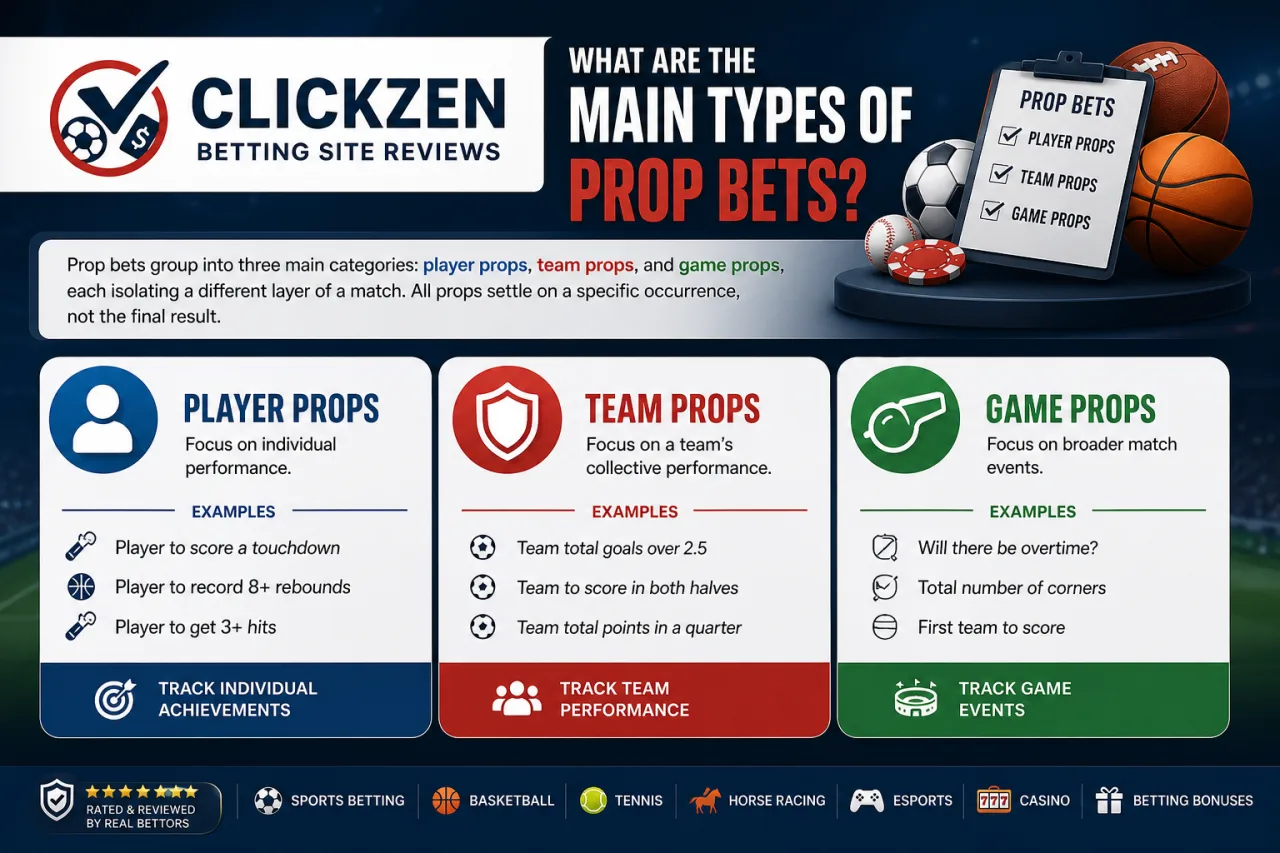
The three main types of sports prop bets are player props, team props, and game props. Each category focuses on a different element of the sporting event.
What Are Player Props?
Player props are wagers based on an individual athlete’s statistical performance during a game or match. Common markets include points, rebounds, assists, goals, shots, passing yards, rushing yards, aces, and other measurable statistics.
These bets settle according to the player’s individual result, regardless of whether the player’s team wins or loses.
Examples vary by sport:
- Soccer player props may include goals scored, shots, shots on target, assists, or cards.
- Basketball props commonly cover points, rebounds, assists, three-pointers, or combinations such as points + rebounds + assists.
- American football props may include passing yards, rushing yards, receiving yards, receptions, or touchdowns.
- Tennis player props can include aces, double faults, total games won, or other player-specific statistics.
Player props can appeal to bettors who have detailed knowledge of individual athletes, roles, playing time, or matchup tendencies.
What Are Team Props?
Team props are wagers based on a specific team’s statistical performance rather than the final match winner or the performance of one player.
Examples include:
- Soccer team corners, team cards, or team total goals.
- Basketball team total points, rebounds, or scoring in a particular quarter.
- American football team touchdowns or team total points.
- Ice hockey team shots on goal or power-play goals.
A wager on a soccer team’s total corners, for example, settles according to the number of corners recorded by that team, even if the bettor has no wager on the match result.
Team props allow bettors to focus on patterns such as attacking style, scoring efficiency, defensive tendencies, pace, or discipline.
What Are Game or Event Props?
Game props are wagers on events or statistical outcomes that apply to the match as a whole rather than to one specific player or team.
Examples may include:
- Whether a game goes to overtime.
- Total goals, touchdowns, or other specified events within a defined period.
- The method or type of the first scoring play where such a market is offered.
- Certain pre-game events, such as a coin toss, depending on the sportsbook and competition.
Game-prop availability varies considerably between sports, leagues, and operators.
Some sportsbooks also offer event-related novelty markets around major occasions such as the Super Bowl. These should be distinguished from ordinary performance-based sports props because they may involve entertainment or ceremonial events rather than actual gameplay.
How Do You Read Odds and Payouts for Prop Bets?
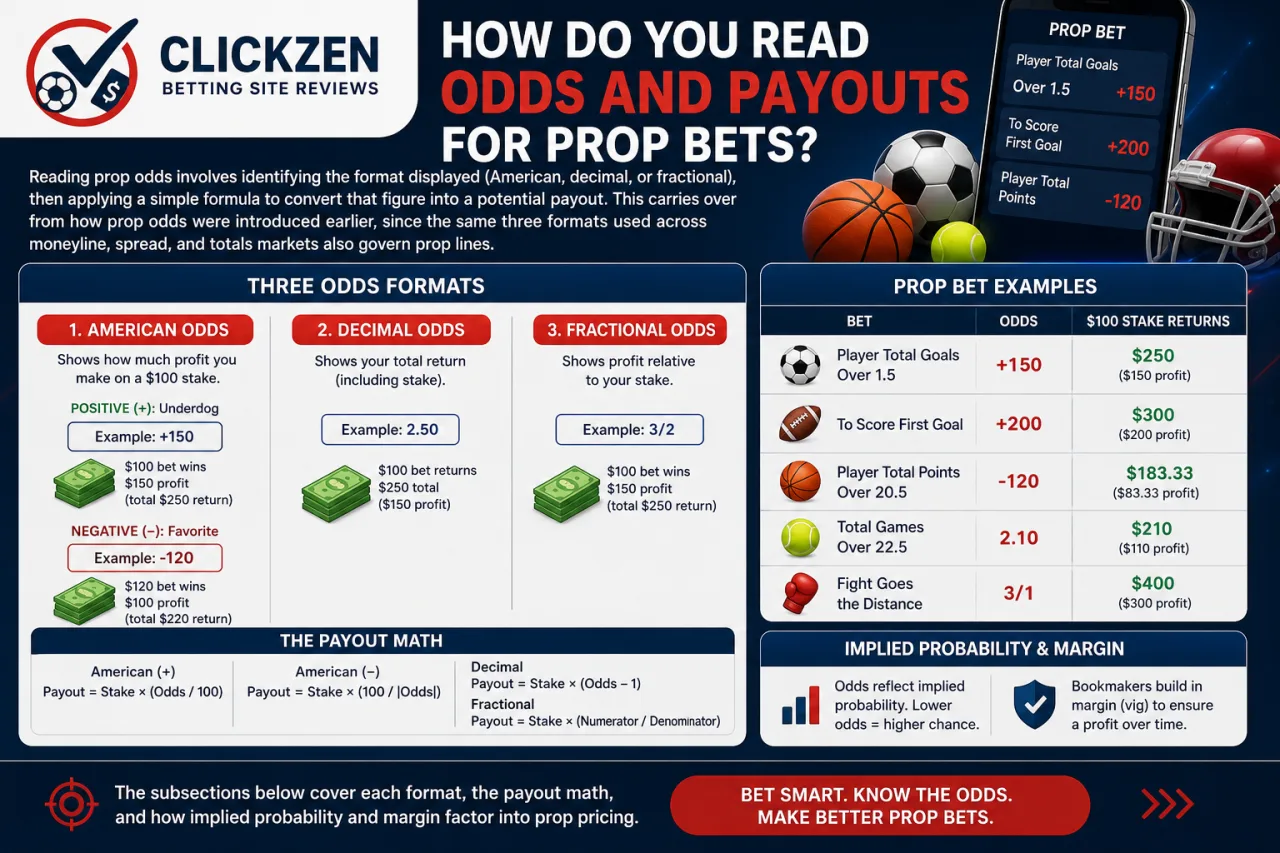
Prop bet odds can be displayed in American, decimal, or fractional format, and the payout is calculated in the same basic way as other sports betting markets.
The odds indicate both the potential return relative to the stake and the probability implied by the sportsbook’s price.
How Is Implied Probability Calculated for a Prop Bet?
Implied probability converts betting odds into a percentage representing the probability reflected by the listed price.
For negative American odds:
Implied Probability = |Odds| / (|Odds| + 100) × 100
For positive American odds:
Implied Probability = 100 / (Odds + 100) × 100
For decimal odds:
Implied Probability = 1 / Decimal Odds × 100
For example, American odds of -150 correspond to an implied probability of:
150 / (150 + 100) × 100 = 60%
However, sportsbook odds usually include a bookmaker margin. As a result, the combined implied probabilities of all mutually exclusive outcomes in a market may add up to more than 100%.
How Do Prop Bet Payouts Compare to Standard Bet Types?
Prop bet payouts are calculated using the same odds formats as standard sports bets, but pricing efficiency can vary significantly between markets.
Major moneyline, spread, handicap, and totals markets often attract substantial betting activity and market attention. Some niche prop markets may have lower liquidity or less available data, which can contribute to different pricing and bookmaker margins.
In practice:
- Major markets may have relatively competitive pricing because many bettors and sportsbooks actively trade them.
- Some player or team props may carry wider margins than highly liquid main markets.
- Very niche props can sometimes be priced less efficiently because there may be less historical data or market participation.
- Pricing varies by sportsbook, competition, sport, and specific market, so prop bets should not automatically be assumed to carry a higher margin in every case.
Comparing the same prop across multiple sportsbooks can therefore be useful because small differences in price can materially affect the long-term value of repeated wagers.
What Strategies Can Improve Your Approach to Prop Betting?
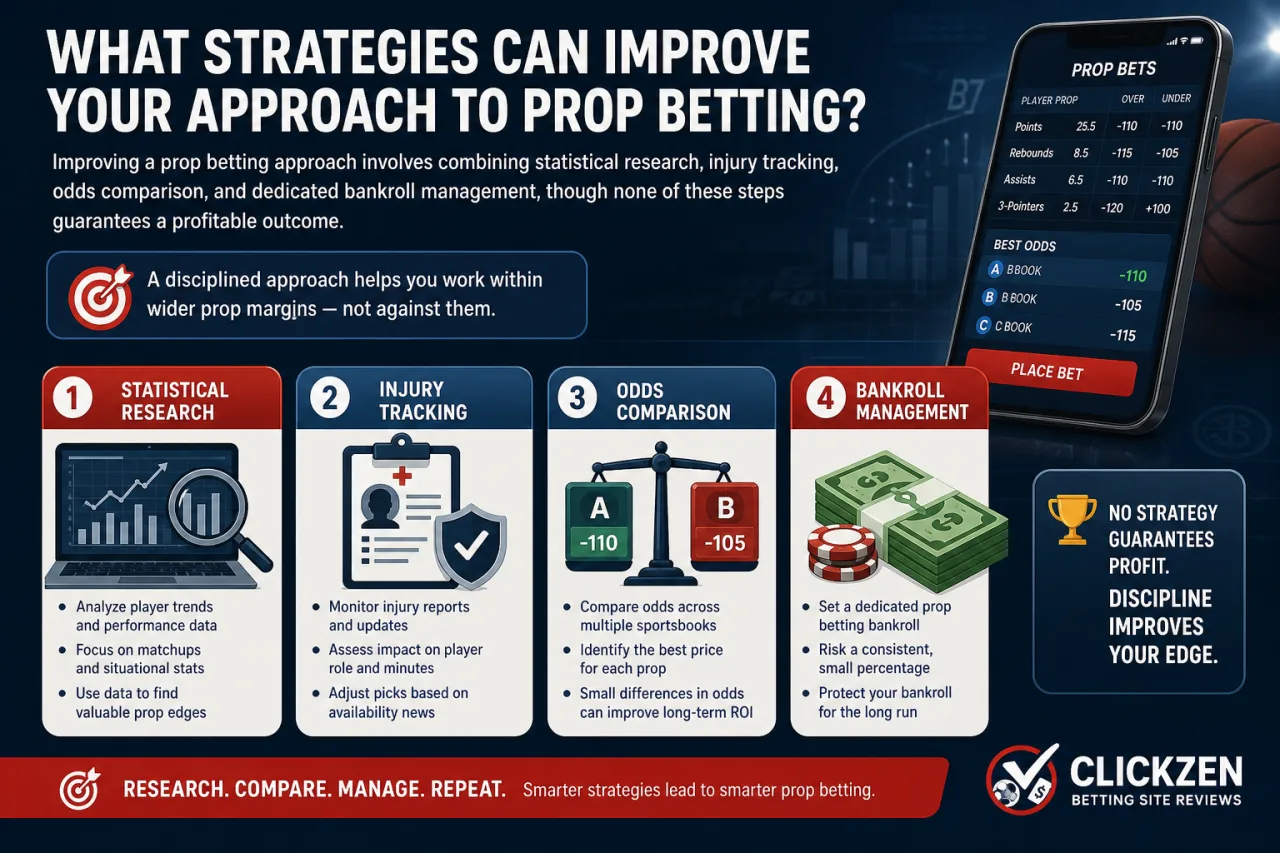
A more structured approach to prop betting combines statistical analysis, matchup research, injury and lineup monitoring, odds comparison, and bankroll discipline. None of these methods guarantees a profit, but they can help bettors make more informed decisions.
How Should You Research Player and Team Props?
Start with information that directly affects the market being considered.
For player props, useful factors can include:
- Recent performance.
- Expected playing time.
- Role within the team.
- Opponent matchup.
- Injuries or suspensions.
- Home and away performance.
- Game pace or expected match conditions.
For team props, analysis may also include tactical style, possession patterns, scoring trends, defensive performance, and opponent tendencies.
Recent statistics should be interpreted in context rather than treated as guarantees. A short run of strong performances, for example, does not necessarily indicate that the same result will continue.
Why Should You Compare Prop Odds Across Sportsbooks?
The same prop market can be priced differently by different sportsbooks.
One bookmaker may offer a slightly different statistical line, while another may offer better odds on the same outcome. Comparing available prices allows bettors to evaluate which market provides more favorable terms.
Even relatively small differences can matter over a large number of wagers.
How Should Injuries and Lineups Affect Prop Analysis?
Player availability can significantly change prop expectations.
An injury to a starting player may:
- Increase another player’s expected minutes.
- Change shot or scoring volume.
- Alter passing, receiving, rebounding, or possession responsibilities.
- Affect the team’s tactical approach.
Confirmed lineups, late injury reports, and role changes can therefore be important when evaluating player and team props.
However, bettors should also recognize that sportsbooks may adjust their lines quickly after important information becomes public.
How Should You Manage a Bankroll When Betting Props?
Bankroll management limits the amount of capital exposed to individual outcomes.
Rather than varying stakes dramatically based on confidence or recent results, some bettors use predefined unit sizes based on a small percentage of their available bankroll.
The goal of bankroll management is not to make a wager more likely to win. It is to limit the financial impact of normal losing streaks and statistical variance.
What Are the Advantages and Disadvantages of Betting on Props?
Prop betting provides variety and allows bettors to focus on specific players, teams, or statistics, but it also carries disadvantages such as volatility and potentially less efficient pricing in some markets.
Potential advantages include:
- More betting options than simply predicting the match winner.
- Opportunities to use detailed knowledge of individual players or team tendencies.
- Access to markets that may behave differently from major moneyline, handicap, or totals markets.
Potential disadvantages include:
- Some niche prop markets may carry relatively high bookmaker margins.
- Reliable data can be harder to obtain for unusual statistics.
- Individual player performance can vary significantly from game to game.
- Injuries, substitutions, tactical changes, and unexpected game situations can quickly affect a prop.
Prop betting therefore offers additional market variety without removing the uncertainty associated with sports wagering.
What Common Mistakes Should Bettors Avoid With Prop Bets?
Common prop betting mistakes include ignoring updated market information, overusing correlated selections, betting based on personal bias, and failing to compare prices across sportsbooks.
Line movement can reflect new information or changing market expectations. A player injury, lineup announcement, weather change, or tactical update may cause a sportsbook to adjust a prop line.
Another issue involves correlated props. Two selections can be statistically connected because they depend partly on the same underlying game scenario. For example, a quarterback’s passing yards and a receiver’s receiving yards may be positively correlated.
Because correlated selections are not statistically independent, simply treating them as unrelated outcomes can misrepresent the probability of the combined result. Sportsbooks may therefore reprice or restrict some correlated same-game parlay combinations.
Betting primarily on favorite teams or players can also introduce bias. Familiarity with an athlete does not necessarily mean the current line represents good value.
Finally, using only one sportsbook may mean accepting a weaker price when another operator offers better odds or a more favorable statistical line.
How Do Prop Bets Vary Across Different Sports and Live Betting?
Different sports emphasize different types of prop markets because each sport produces its own statistics and scoring patterns.
Examples include touchdown and yardage props in American football, player shooting and scoring props in soccer, points and rebounds in basketball, and aces or games won in tennis.
Live betting adds another dimension because some sportsbooks update prop markets while an event is in progress.
Are Prop Bets Available in Live/In-Play Betting?
Yes, many sportsbooks offer selected prop markets during live or in-play betting, although availability varies significantly between operators and sports.
Live prop markets can change rapidly because sportsbooks update their prices according to events occurring in the game.
Typical characteristics include:
- Odds changing as the score and match situation develop.
- Player props adjusting according to playing time and performance.
- Some markets being suspended or removed as settlement becomes imminent.
- Certain wagers potentially qualifying for Cash Out where the operator supports the feature.
Cash Out is not guaranteed for every prop bet. Eligibility depends on the bookmaker, market, sport, and current state of the wager.
How Do Novelty Props Differ From Standard Sports Props?
Novelty props are markets based primarily on entertainment, ceremonial, cultural, or other non-performance events rather than normal player or team statistics.
They differ from standard sports props, which are generally linked to measurable sporting actions such as points, goals, rebounds, passing yards, or team totals.
Depending on the operator and jurisdiction, novelty markets may include:
- The winner of an entertainment awards event.
- Certain outcomes connected to television or entertainment broadcasts.
- Ceremonial details associated with a major sporting event.
- Other non-sporting prediction markets where legally permitted.
For example, some major-event markets may involve the length of a pre-game performance or another entertainment-related occurrence. Although such markets can be associated with a sports event, they are different from props based directly on athletic performance.
Political or election-related betting is not universally available. Whether such markets can be offered depends heavily on the operator, platform type, and applicable laws and regulations in each jurisdiction.
Conclusion
Prop bets focus on a specific statistic, performance, or event rather than simply asking which team or player will win the overall contest. Player props measure individual performance, team props focus on collective statistics, and game props cover broader match-level occurrences.
The same American, decimal, and fractional odds formats used in other sports markets also apply to prop betting. Bettors can use those odds to calculate potential returns and implied probability, while recognizing that sportsbook margins and pricing efficiency vary between markets.
Researching player roles, matchups, injuries, lineups, statistical trends, and available prices can support a more informed approach. Bankroll management can also help control financial exposure. However, prop betting remains subject to uncertainty, variance, and the possibility of losing money.
Understanding how different prop markets are defined, priced, and settled is therefore more important than relying on any single betting system or short-term statistical trend.
Marcus Zeno is the CEO and Lead Betting Analyst at ClickZen. With over eight years of experience in the iGaming industry, he specializes in evaluating global sportsbooks, mobile betting apps, and bonus terms. Marcus is dedicated to cutting through promotional noise to provide bettors with transparent, fact-based insights.

Top Rated Casinos

FanDuel is a regulated North American betting and gaming brand offering Sportsbook, Casino, Fantasy, Racing and prediction markets, with product availability determined by state or provincial regulations.

DraftKings is a regulated North American sportsbook and gaming operator offering sports betting, live wagering, casino games, daily fantasy sports, Pick6 and horse racing in eligible jurisdictions.

Fanatics Sportsbook is a regulated U.S. betting platform available in 23 states plus Washington, D.C., offering major sports markets, live betting, same game parlays and a distinctive FanCash rewards ecosystem.


ClickZen is an independent betting information and review website providing clear, practical insights into sportsbooks, online casinos, betting apps, bonuses, and related services for a global audience.
This website is intended for users aged 18 and over. Gambling can be addictive, so please gamble responsibly. The content on this website is for informational purposes only.
About ClickZen